Sibs.
Turning a trade-only app for everything into a sneaker marketplace with 10,000 users and $10M in inventory.
- My role
- Product designer, grew into Head of Product
- Team I led
- Engineers, a PM, customer service and our social media lead
- Platform
- iOS marketplace app, store integrations and wholesale
- Results
- 10,000 users and $10M in listed inventory, with partner stores across the US
Where it started
An app for trading anything, with no money involved.
Sibs launched as a trade-only marketplace for everyone and every category. I joined as the product designer.
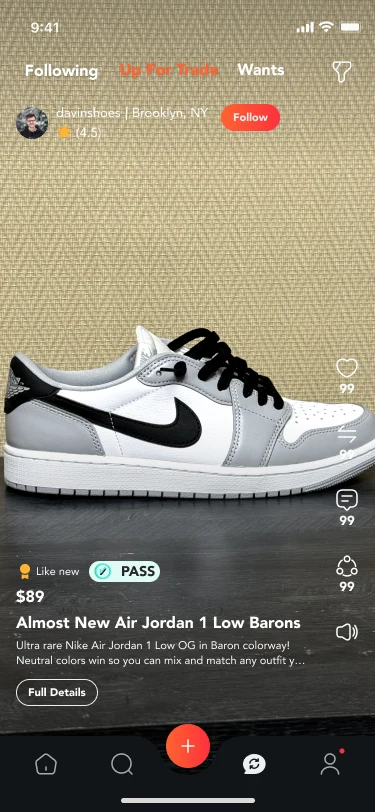
Our users quickly showed us who Sibs was really for. They kept putting sneakers on the app. Rather than fight that, we followed it, and the product, the features and the business changed around the sneaker community.
Users shaped the product
Sibs had three groups to serve: buyers, individual sellers and, later, stores. Most of what Sibs became came straight from what those users asked for. My job was to turn their requests into a product strategy and design the features that answered them.
Bring money in
Stripe
Users wanted to buy and sell, not only trade. We added cash, and later cash plus trade bundles, on Stripe.
Speak sneaker
Coin flip
Sneaker culture settles price gaps by flipping for it, so we built a coin flip right into the offer chat.
Trade with trust
Guaranteed upon arrival
Counter offers, guaranteed upon arrival and CheckCheck authentication made high-value trades feel safe.
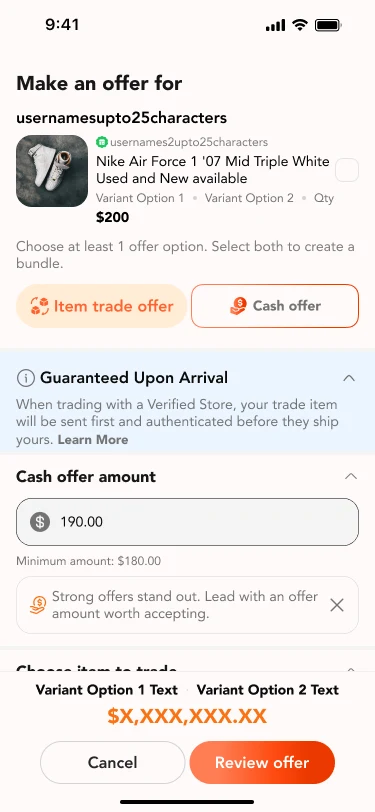
Cash and tradeOne offer can mix an item trade with cash, with a minimum amount to keep offers serious.
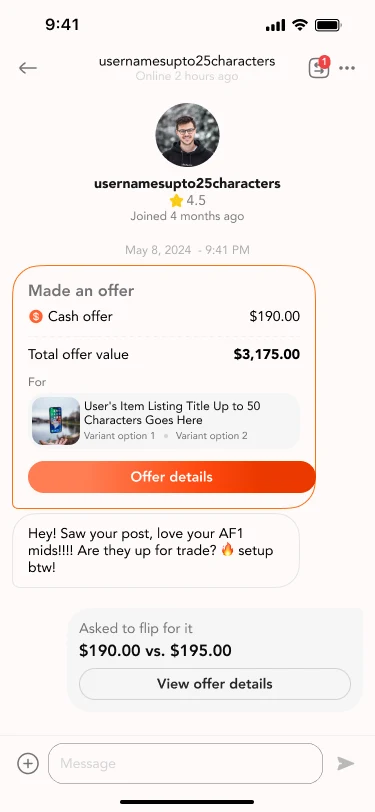
Flip for itWhen buyer and seller are close, either side can ask to settle the gap with a coin flip.
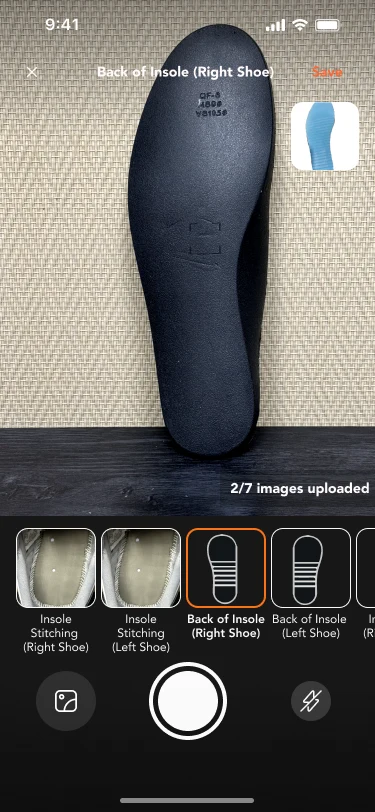
Authenticate in-appA guided camera captures the shots CheckCheck needs, and listings earn a Pass badge.
Strategy: stores, not just people
Inventory was the product.
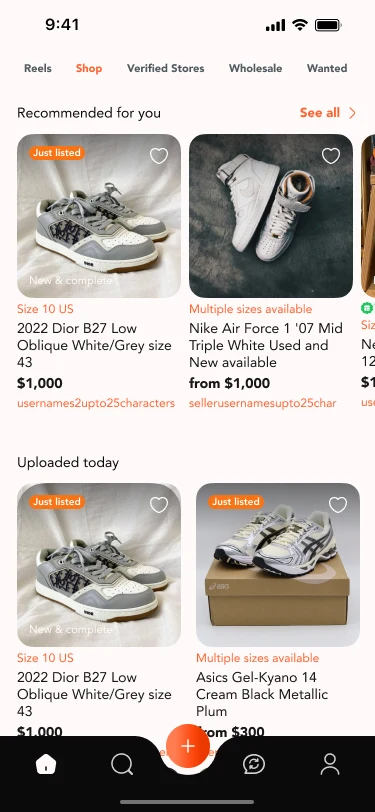
A marketplace is only as good as what's on it, and individual sellers alone couldn't fill the shelves. I pushed for Sibs to bring real sneaker stores on board, and we partnered with stores all over the US as verified stores with badges, storefronts and live shows.
To feed those stores, we brought on wholesalers who supplied inventory into the stores through Sibs. Stores could claim wholesale items at reseller prices and list them straight away.
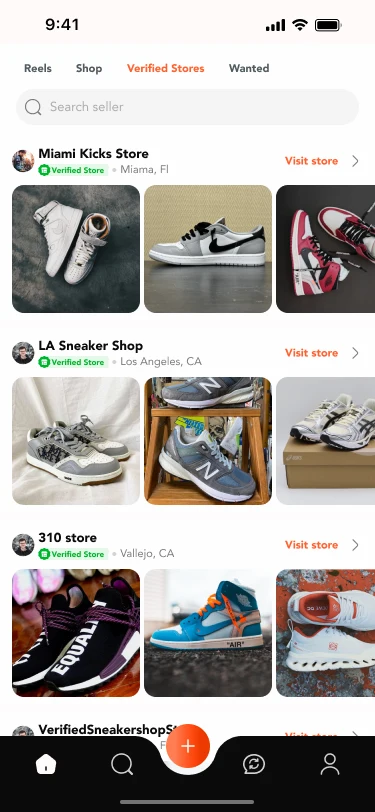
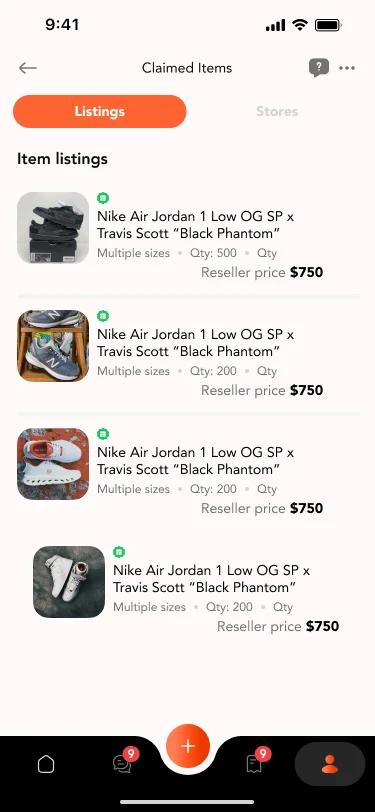
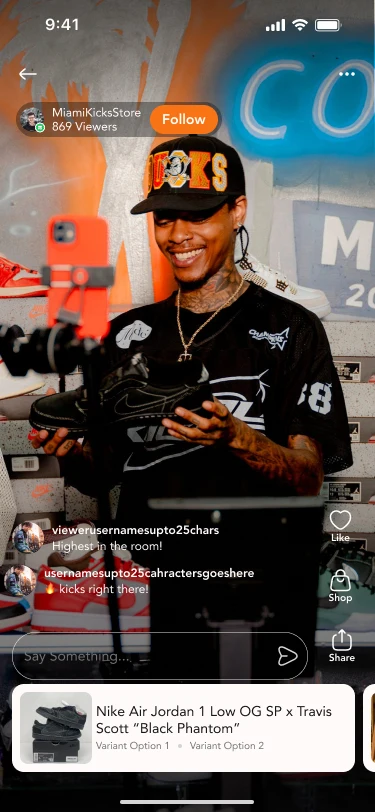
From 0 to $10M in inventory
The unlock was making it effortless for a store to bring its entire catalog onto Sibs. Through integrations such as Shopify, a store could upload its whole inventory instead of listing pair by pair.
Integrations, wholesale supply and partner stores together took Sibs from zero to $10M in listed inventory, alongside a community of 10,000 users.
A design system built for a marketplace
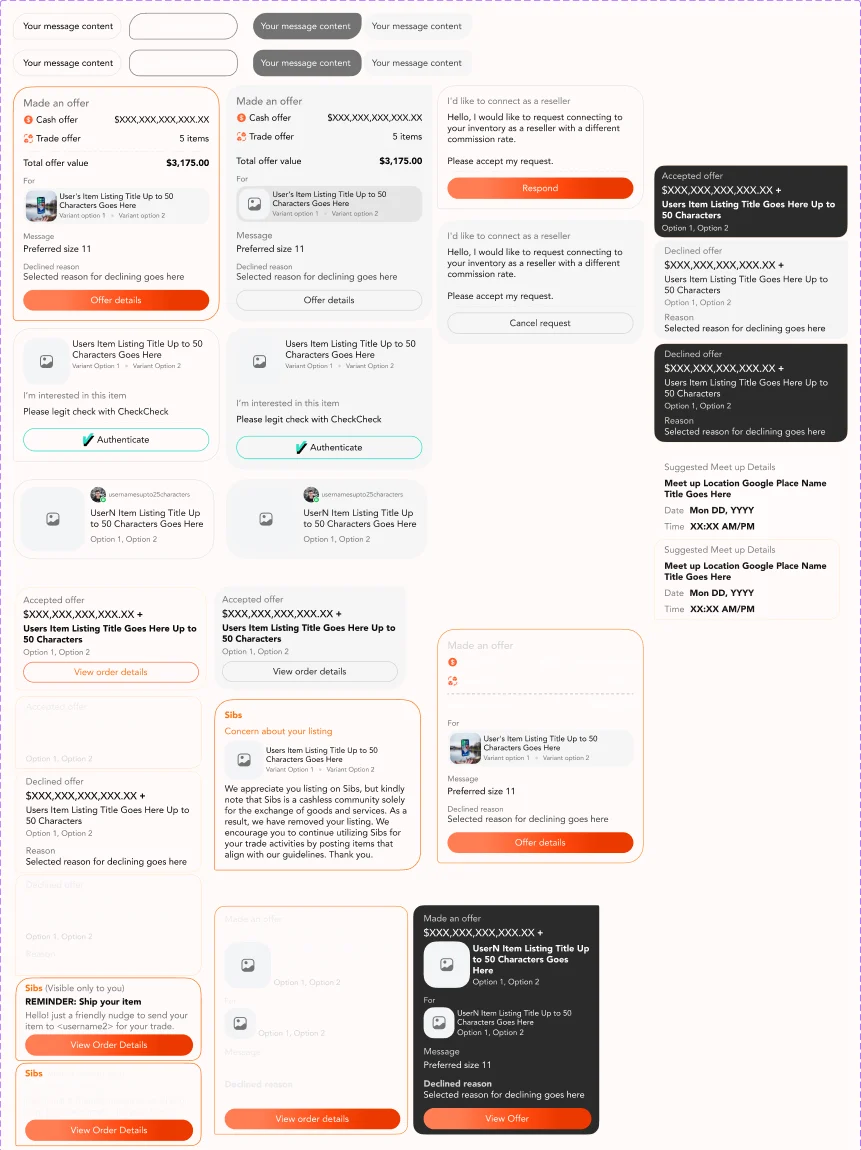
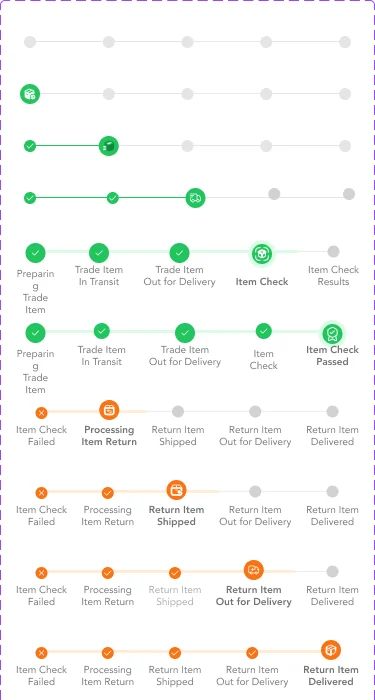
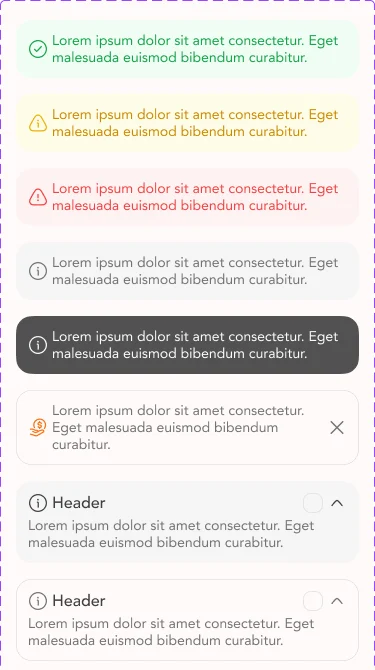
I built the Sibs design system in Figma so the app could grow without the UI drifting. It holds around 100 components and about 1,000 variants, in light and dark themes.
Much of it is marketplace-specific, not generic UI: listing cards, offer and counteroffer chat bubbles, order-status trackers for buyers, sellers and verified stores, CheckCheck authentication badges, and partner buttons for Stripe, Shopify and CheckCheck.
The type scale is named by job, not size. "Action/Heavy" is reserved for primary buttons and key conversion moments like a listing price. Components are set up with properties such as size, state and theme, which mirrors how engineers build them and made handoff faster.

Growing into Head of Product
As Sibs grew, so did my role. I moved from designing the product to running it as Head of Product: leading our engineers, a PM, customer service and our social media lead, and owning what we built and why.
I design with AI tools every day, using prompts to explore directions, prototype and iterate faster, and I know the development process well enough to give engineers what they need to build.
I also created the company's pitch deck and supported fundraising meetings, telling the product story to investors.
What I took away
The best product decisions at Sibs weren't mine alone. They came from watching what users actually did, like listing sneakers on an app built for everything, and having the conviction to follow them. The strategy grew out of that: serve the sneaker community, then bring in the stores and supply that community wanted.